
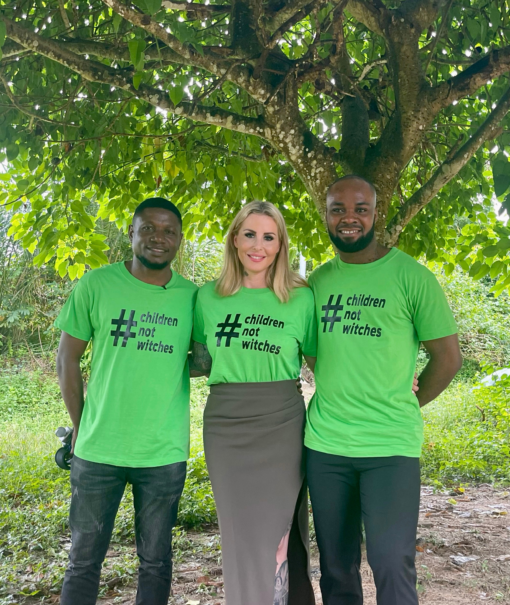
Leading the fight against superstition
Land of Hope saves “witch children”. But our work is about much more than that. We want to lift some of the world’s poorest communities out of poverty through enlightenment. Only in this way can we truly end superstition.


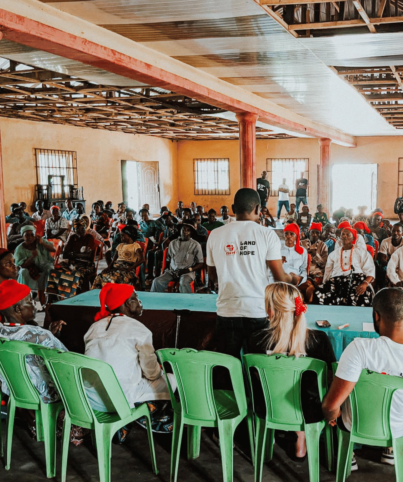

Root of the problem
98 children live at our Children’s Center, all accused of being witches. We saved their lives, but to save more, we must address the root of the problem; superstition.
Nigeria’s superstitious communities are among the world’s poorest, and despite it being the government’s responsibility to educate and develop all communities, the poorest ones still remain neglected. We aim to empower their position through enlightenment and education, so they can escape poverty – and children no longer become scapegoats.

Long-term change
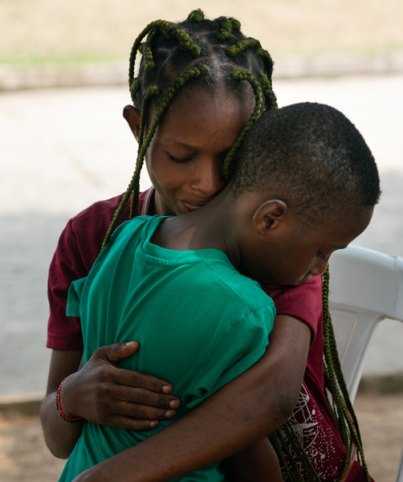
The change we want to create doesn’t happen overnight. Far from it. So, we patiently take small steps every day towards a safer and more promising future for children in superstitious communities.
We do this by teaching our children about their rights and encouraging them to become independent individuals who contribute to developing their communities. It’s important that the children remain part of the local community. We want the community to realize that the children are healthy, happy, and successful individuals – not witches. Therefore, reintegration and reunification with the family are essential in our work. Keeping the children away from their families will only confirm everyone’s beliefs that the accusations were justified.


We built hope
It’s ingrained in our outlook on the world. It’s part of our name. Hope. We are truly optimistic about the mission we are on, but we’re not seeking random hopeful glimpses. We act.
We build the buildings needed to shelter children at risk. We build relationships with impoverished local communities to gain their trust. And we rebuild the character within our children so they become living proof that superstition has no justification.

Reasons to believe
Land of Hope’s work is built on a fundamental belief: that superstition can be fought through protection, awareness, education and a persistent presence in local communities.
1,000 children rescued and rehabilitated
Through rescue missions and awareness work, we have helped children who were accused of witchcraft, abandoned by their family, abused and left to die.
98 children in our care
The children at Land of Hope are protected and given food, medicine, education, care and the opportunity to grow up as strong, independent human beings.
30,000 m² children’s centre built in Nigeria
We have built one of West Africa’s largest children’s centres, with its own health clinic, school facilities, farmland, art workshops and safe surroundings for the children.
All children have access to school and education
All children at Land of Hope go to school, are enrolled in education or are in vocational training. More than 20 of our children have started university studies.
Cooperation with chiefs and local authorities
We have succeeded in building cooperation with village chiefs and authorities, enabling us to carry out rescues legally and influence attitudes through awareness and education.
Strengthening the local community around us
We create jobs, trade and development in the local area and support poor villages with food, medicine and other necessities, so fewer people seek help from witch doctors.
Greater self-sufficiency
We run our own farm with cattle, fish and vegetables, and we have our own water system providing clean drinking water. This makes us stronger in a country marked by political and economic challenges.
International attention
Land of Hope’s work with children accused of witchcraft has been featured in international media, and our latest documentary is shown on HBO Max in more than 60 countries.
Supporting poor families
Every year, we distribute more than 300 bags of rice to poor families. Especially single mothers, who are often at the bottom of the social hierarchy and particularly vulnerable.
Follow the continued results of our work