
Anja after the attack in February 2026
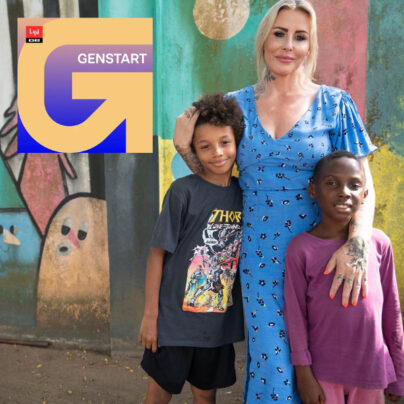
Anja after the attack in February 2026
Anja Ringgren Lovén feared for her life when she and her team were attacked in Nigeria. In Genstart, a podcast from Denmark’s national public service broadcaster, DR, she talks about the experience, her promise to her son, and missing the life she has built with her husband David and the children at Land of Hope.
Following a violent attack in February 2026, Anja has had to take a step back. In Genstart, she describes what it feels like to fear for your own life. And to discover that your son has also been afraid of losing you.
The interview is in Danish. For our international supporters, we have brought together the main parts of her story below, followed by questions and answers translated from the interview.
What happened in February?
Anja and her team were travelling to a village with Samuel, who lives at Land of Hope. They were going to visit his mother, who was seriously ill and dying. It was a village Anja and the team knew well and had visited many times. But the situation turned violent.
A large crowd surrounded their bus. A member of the team was attacked, and Samuel was pulled from the bus as Anja tried to hold on to him. Some people in the village believed they had come to kidnap children. Others recognised Anja and tried to persuade the crowd to leave her alone. Eventually, Anja was led through the crowd to the village chief’s house, where she was held against her will.
Outside, she could hear people shouting that she was going to die.
Although Anja and her team were able to leave the village alive, the experience has stayed with her.
During the attack, she called her husband David for help. But it was their son who answered the phone and heard her shout: “They are killing us.”
He, too, thought she was going to die.
Fear, family and missing home
Anja has long known that her work can be dangerous. But she has also always drawn a line: if it affected her son, she would stop and reconsider.
After the attack, that line has been reached.
At the time of the Genstart interview, Anja was in Denmark and had not returned to Nigeria since the attack. Being away offers safety. But it also means that she and her son are separated from much of their family and everyday life.
David is in Nigeria. So are the children at Land of Hope. Anja miss them and they miss her. Her son also misses the children’s home and his father.
“It’s very complicated,” she says in the interview.
Over 14 years, Anja has helped create a home for children who were let down by the very people who should have protected them. She has been alongside them from their rescue to a life with care, education and new opportunities. Deciding when she is ready to return, and what her life in Nigeria will look like, is not simple.
The will to keep fighting is still there
In the interview, Anja is asked whether years of danger and resistance have made her cynical. She speaks openly about the anger she felt during the attack. About a moment when she felt the local people should just manage without her, and that she would go home to Denmark.
But when the conversation turns to the children who are still accused of witchcraft, she feels something else: the urge to go back. To tell people that witches do not exist. To keep fighting.
Asked whether she has personally rescued her last child accused of witchcraft, she replies:
“No, I really hope I haven’t.”
The interview offers no simple answer to how that hope can be reconciled with the promise she has made to her son. Anja is still working through it. She misses the children and her life in Nigeria, while also needing to look after herself and her family.
“I’m taking a break now, and we’ll see what happens.”
This article is based on Anja Ringgren Lovén’s interview in Genstart from DR. The podcast is in Danish, but the following excerpts have been translated from the Danish interview.
Interviewer: What does this mean for your life? Are you now taking a long break from the work you have been doing for so many years?
Anja: “It’s very complicated. Because if I say I’m taking a break now, that also means taking a break from my son seeing his father. My husband can come to Denmark, but I miss the Children’s Center, I miss the children, and they miss me. My son misses the children’s home. Whether I’ll go back to Nigeria and spend Christmas there this year, as I have every year for seven years, I don’t know. But I’ll never say never.”
Interviewer: Has your son asked you to please stay away from this work?
Anja: “Yes, my son has asked me whether, when we go back to Nigeria, I would please stay away from the villages. He has said that.”
Interviewer: What did you tell him?
Anja: “I told him: Of course I will. I’ll stay away from the villages and stay at the Children’s Center, playing football. I won’t go out to the villages. I’ve promised him that.”
Interviewer: Hasn’t part of you become cynical? You’ve been doing this work for 14 years, and children are still being accused of witchcraft, while you are attacked and your life is threatened.
Anja: “Right when I’m being attacked, and I see women standing there shouting that I should die, I get angry and think: “Then you’ll just have to manage on your own. I’m going back to Denmark.”
Interviewer: And that is what you have done. Do you think you have personally rescued your last child accused of witchcraft?
Anja: “No, I really hope I haven’t. I want to fight, and I get angry when I think about it. I feel like shaking the local people and shouting right in their faces: There are no witches. Please understand that. I really want to go. Now that I’m talking about it, I feel like getting on a plane and travelling to Nigeria. Maybe Genstart will be what gets me to go to Nigeria. I hadn’t expected that.”